The rapid emergence of artificial intelligence has made many people uneasy. Machines now generate text, images, and ideas that once seemed uniquely human. Some worry that humans are now “creating intelligence from nothing.” Yet when we turn to our tradition, we discover our sages have already grappled with the idea that human beings might form human imitations. The idea of humans “creating” is not new.
The Babylonian Talmud (Sanhedrin 65b) records a remarkable story:
“רבא ברא גברא” — Rava created a being that looked like a human. Rava sent his creation before Rabbi Zeira. Rabbi Zeira spoke to the being but the being did not reply. Rabbi Zeira said: “You were created by one of the sages; return to your dust.”
This passage describes a human-like being created through sacred knowledge.
The Maharsha, R. Shmuel Eidels (16th-17th Century), explains that the creature could not speak because it lacked a neshama, a divine soul. It possessed only the nefesh, life force, of animals. True speech and consciousness come only from God, as the Torah says:
“ויפח באפיו נשמת חיים” — God breathed the soul of life into the human.
In other words, even when a rabbi “creates,” he does not truly create from nothing the way God does. Humans’ acts of creation rearrange the materials and forces that God has already placed in the world.
In this sense, AI arises from precedented history. Humanity has long used wisdom and technology to produce things that simulate human abilities and likenesses. The sages already understood the distinction between imitating life and creating a soul.
Notice something striking in the story above about Rava. The Talmud does not forbid the experiment. Rava was able to create the human-like being. The sages understood that human knowledge naturally expands.
Rabbi Zeira did not pretend the human-like being never existed. Rabbi Zeira recognized that the figure, though human-like, was not truly human, because it lacked the defining aspects of tzelem Elokim (Divine image): the capacity for meaningful speech.
This reflects a broader pattern in Torah history. New realities develop, such as agriculture, government, printing, and electricity. Jews determine how to respond to the ethics and morality of the new reality. The existence of a particular technology does not automatically determine whether it is good or bad. We need to examine how it is used.
Artificial intelligence, whether we like it or not, will be part of the world our children inhabit. The question is not whether AI exists, but what role it will play in human life.
Remember that the story ends with Rabbi Zeira telling the artificial being: “Return to your dust.” The sages retained authority over what they created, which demonstrates an important lesson. Human ingenuity must remain subordinate to God’s moral wisdom.
The discussion among later authorities reinforces this point. The Chida, Rabbi Haim Yosef David Azulai ben Yitzhak Zerachyah (18th Century) was asked whether a creature created by kabbalistic means could count toward a minyan, a quorum of ten. He responded no, because true humanity requires the divine soul. Technology can imitate human behavior, but it cannot replace the spiritual essence of a person.
This insight underlines a critical point for the modern moment. AI can produce language, analyze information, and imitate thought. But it does not possess neshama, moral responsibility, or divine image.
Therefore, we must understand the use of technology within the frame of our sacred texts and ancient wisdom. Our students need this type of guidance.
Our tradition provides those principles:
Humanity as a manifestation of the Divine image (tzelem Elokim) leads our aspirations.
Truth and intellectual honesty act as our north star.
Responsibility for the consequences of our creations rests with each person and flows through the community.
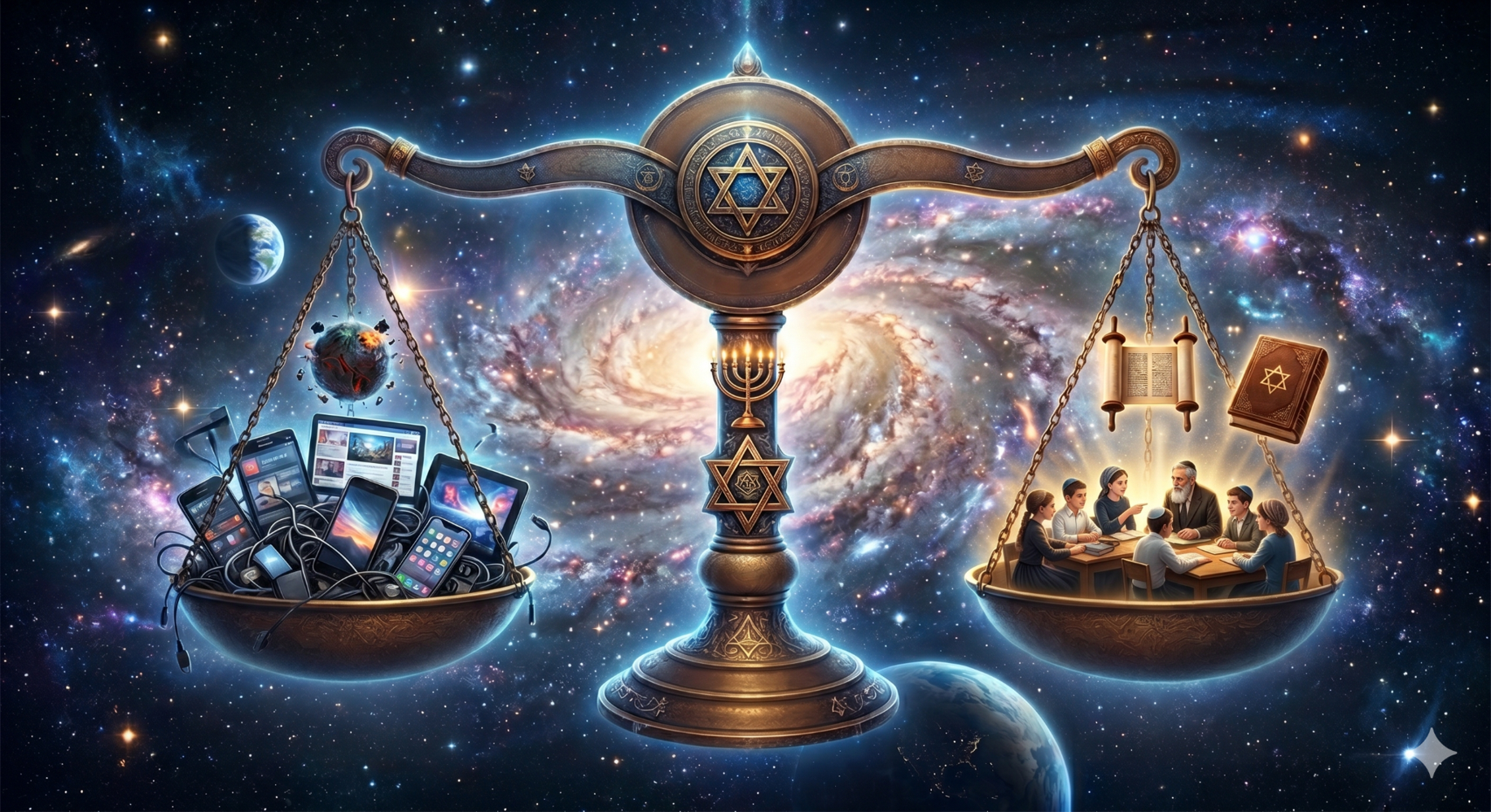
If these principles guide our students’ use of AI, technology becomes a tool for human flourishing rather than a force that diminishes it. In the end, the difference between a world dominated by technology and a world elevated by technology will depend on whether our children bring Torah values and optimism into the systems they build.
And perhaps there is one more layer here that should give us pause. Rava’s creation could not speak not simply because it lacked words, but because it lacked a world of meaning. It had no inner life, no neshama, no capacity to participate in truth as a human does. But today, we are building systems that can speak—and speak persuasively. The question, then, is no longer whether machines can imitate humans. The question is whether humans, especially our students, will begin to imitate the machines outsourcing their thinking, flattening their language, and allowing external systems to shape their inner world.
That is not a technological problem. That is an educational one. If we do not actively cultivate students who can think deeply, speak authentically, and relate to God and truth from within, then we risk raising a generation that is, in a subtle way, closer to Rava’s creation than to Adam and Eve.
Our task, therefore, is not only to teach about technology, but to form human beings whose inner lives are strong enough that no external system, no matter how powerful, can replace their neshama.
And that is the enduring lesson: We are not only responsible for what we create, we are responsible for who we become in the presence of what we create.